
Share Norberto Pedro James Rawlings's obituary with others.
Invite friends and family to read the obituary and add memories.
Stay updated
We'll notify you when service details or new memories are added.
You're now following this obituary
We'll email you when there are updates.
Select your format and elements to print
IN LOVING MEMORY OF Norberto Pedro James Rawlings
Norberto Pedro
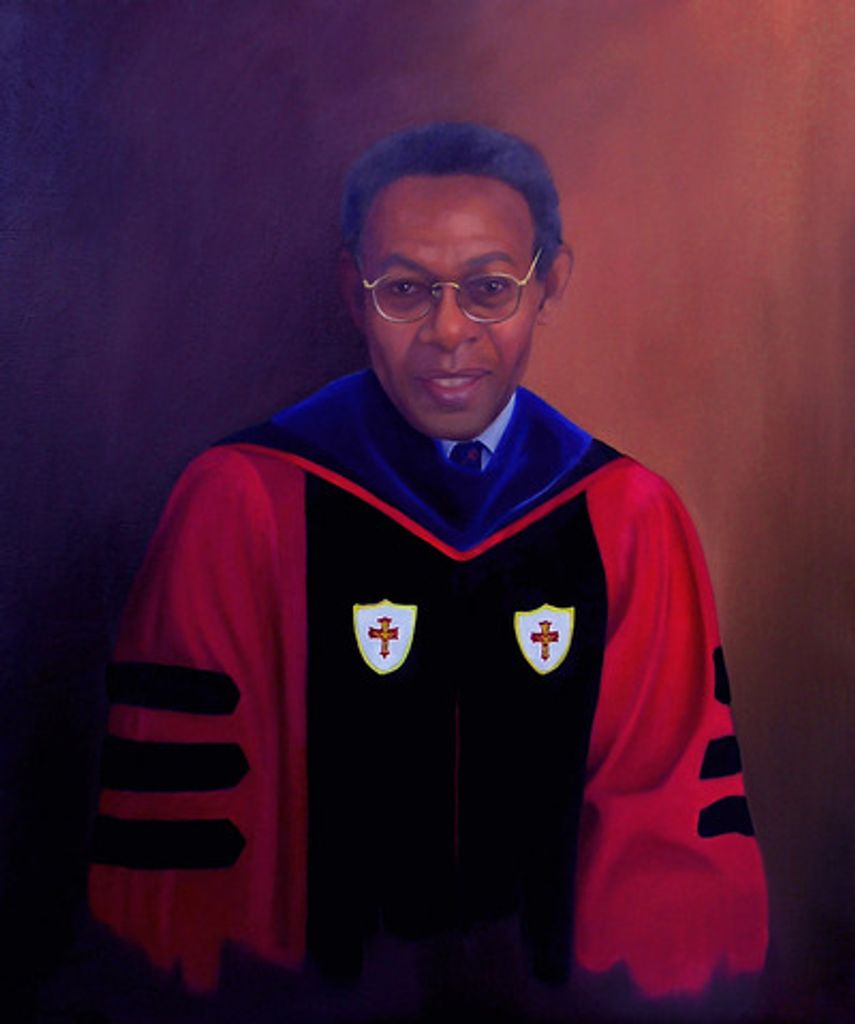
James Rawlings
Feb 6, 1945 — Jan 7, 2021
Wellesley
Norberto Pedro James Rawlings' Obituary
Norberto Pedro James Rawlings passed away peacefully in his sleep on January 7, 2021, after a 15-year battle with Parkinson's disease.
His entire life can be traced through his seven books of poetry, for which he is widely known and cherished in the Dominican Republic, from the capital of Santo Domingo to Consuelo, the sugar plantation in San Pedro de Macorís where he was born on February 6, 1945.
James's family is part of an English-speaking minority community descended from African slaves known pejoratively as " cocolos " who came to the Dominican Republic from the colonized islands of the British Caribbean to work in the sugar industry in the mid-19th century. The " cocolos " (a term that some suggest comes from the Dominicanization of the word "Tortola," because the largest group came from that West Indian Island) were seen as a necessary labor force, but they were neither loved nor accepted by society.
Norberto grew up in a Spanish-speaking country, but returned home every day to an English-speaking family: his father, Aubrey James, a Jamaican immigrant who worked as a chemist at the sugar mill, and his grandmother, Marion Peters, who raised him while his mother Dolores Rawlings worked in the capital.
Norberto came of age under the dictatorship of Leónidas Trujillo and as a child he touched the pistol holstered by one of Trujillo's sons, on a dare.
From a childhood of deprivation, he freed himself by reading all he could, and continued his education by capturing a grazing horse to make the seven-mile ride bareback to Colegio San Estéban, a private secondary school. His poem, "I Had No Books," evokes his early years when he slept on a rag bed and read outside under a lamppost.
He was known for his patience, willing to fish with nothing but a piece of string. His placid demeanor, soft eyes, and lopsided smile betrayed a sharp wit and almost supernatural powers of observation. This ability to detect the truth beneath the surface informed his poetry and guided his decisions in life.
In the 1960s, Norberto James moved to Santo Domingo to complete high school at the Liceo Unión Panamericana where he excelled in track and field and won the national 400-meter track race. Because his parents were foreigners, he was prohibited from participating in politics. Despite this rule, he became very active in the revolutionary groups in his school and nearby.
Finally, at age 19, he was expelled from school for his political activities. Soon after, James' education came to an abrupt halt when civil war broke out in the Dominican Republic. His mother left the country (coming to New York) and he joined the rebel forces of the Command located in the Argentine school.
During the Civil War, James discovered for the first time that he was a poet. His Command was mostly made up of artists, with whom he fit in as a painter. When he read to the soldiers a poem that he had written, they praised it so much that he began to think about writing a book. That book materialized four years later with the title, Sobre La Marcha (On the March) , which contains his most famous poem, "The Immigrants," a tribute and a lyrical history of the Cocolo community. Six more books of poetry would follow over the course of his lifetime.
During this time of intense political repression, James was also working at a radio station broadcasting revolutionary messages. He received a warning to leave the country and managed to escape persecution by going into exile on the pretext of studying abroad at the University of Havana. He left the Dominican Republic in secret, going underground, taking refuge in the homes of sympathizers in Paris and Madrid, before traveling to Eastern Europe to make the final trip to Cuba, where he was awarded a scholarship to study literature.
During his entire seven-year stay in Cuba, he was known by a clandestine name, Antonio Álvarez, and assumed a new identity as a Jamaican, an accent that he could manage with ease because of his father's Jamaican roots. In Cuba, he finally obtained a university education in a society he loved; he was allowed him to earn the academic degree that his own society might have made difficult for him.
James returned to a changed political climate in the Dominican Republic in 1979, where he was awarded a powerful position on the National Energy Policy Commission. He didn't know anything about energy having majored in literature, but he went to Puerto Rico to study and learn from the Puerto Ricans. He returned with a report that so impressed everyone that he was sent to a Latin American conference of energy experts in Quito, Ecuador.
James decided to settle down and start a family; he married Luz Altagracia Rodríguez and in a short time had two daughters, Malva Mariana and Ruth Esther. However, in spite of the success of his return to his homeland, he disliked the corruption that surrounded him and he decided to pursue graduate studies abroad.
In 1983 he came to the United States to complete a doctorate in Hispanic Language and Literatures at Boston University, where he met his second wife, Elizabeth Wellington. Together they formed a literary team of poet and translator, and upon receiving their doctoral degrees, they filled academic teaching positions in the Boston area. Meanwhile, Norberto continued to write and publish books of poetry.
In 1992, they had a son, Tito Wellington James, and Norberto became an American citizen in a moving ceremony in Boston, Massachusetts.
Dr. Norberto James ended his teaching career as a beloved Spanish teacher at the Boston Latin School, where his students affectionately called him "Dr. J." His generosity of spirit helped prepare and direct students with limited resources to prestigious universities such as Harvard. He also continued to give poetry readings and received numerous awards and honors both in the United States and in the Dominican Republic. His last poem was written only six months before his death; his "short verses" became the capstone of his complete works, Poesía Completa , Norberto James Rawlings (2020), which he lived to see published.
Norberto James is survived by his wife of 34 years, Elizabeth Wellington, his son Tito Wellington James, as well as Norberto's daughters from a previous marriage, Malva Mariana James Mangan and Ruth Esther James Rodríguez. His "lovely grandchildren" include Malva's son, Rey, and daughter Lana, and Ruth's son, Luka. Funeral arrangements are planned for late summer in Haverhill, New Hampshire.
Funeral Services for Norberto Pedro James Rawlings
Celebration of Life

Saturday
Jeffers Hill Farm
Starts at 1:00 pm
Graveside Service
Saturday
East Haverhill Cemetery
Starts at 2:30 pm
Norberto Pedro James Rawlings' Guestbook
Visits: 10
This site is protected by reCAPTCHA and the
Google Privacy Policy and Terms of Service apply.
Service map data © OpenStreetMap contributors